


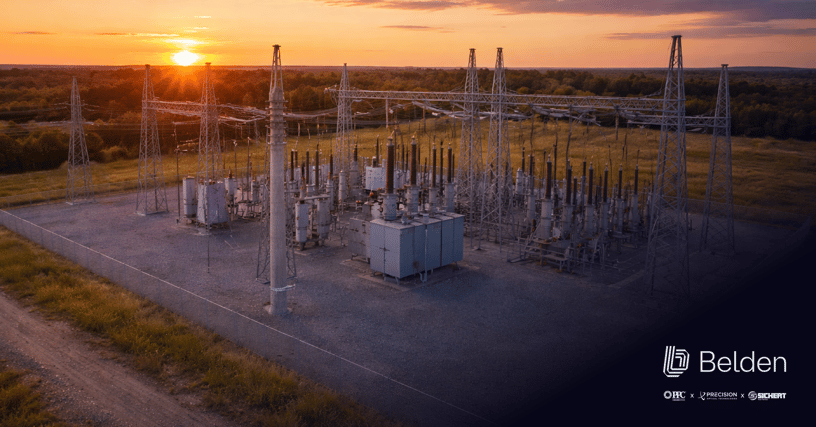
For decades, the utility substation’s purpose was simple: step down voltage and, at most, pass along basic data to a control center over a copper wire connection. That all began to change around 2017. As investor-owned utilities (IOUs) grappled with rising operating costs, gradual phase-out of leased T1 lines, and increased concerns regarding cyber terrorism, many began trenching fiber directly to their substations.
At first, the motivation was largely financial: trading ongoing OPEX for owned infrastructure. But today, the reason for Fiber to the Substation (FTTS) runs much deeper. It’s no longer about replacing a legacy phone line – it’s about ensuring the resilience of the modern power grid.
Artificial intelligence (AI) and hyperscale data centers are straining power generation and distribution like never before. As a result, utilities are increasingly pursuing Grid Optimization strategies to manage complex bidirectional power flows and fluctuating loads in real-time. To keep voltage stable and prevent outages, the substation is rapidly evolving from a passive electrical waypoint into a real-time, data-driven edge node.
Why Fiber to the Substation is Essential for the Modern Grid
The power grid is undergoing its most significant transformation in more than a century. Historically, the grid functioned as a one-way street with power flowing from massive generators to passive consumers. Now, power-hungry AI data centers are creating large, highly variable demand patterns that traditional grid infrastructure was never designed to accommodate. Managing this reality requires continuous monitoring, advanced analytics, and dynamic control – all hallmarks of modern grid optimization.
That kind of performance simply isn’t possible over last-generation copper T1 lines. It depends on low latency, high bandwidth, and immunity to electromagnetic interference (EMI) that only fiber can deliver. In other words, fiber delivers the “fat pipe” necessary to backhaul terabyte-level data to the control center without bottlenecks.
At the same time, the security landscape has become far more demanding. Compliance requirements from the North American Electric Reliability Corporation (NERC), particularly NERC CIP (Critical Infrastructure Protection), now place strict expectations on both physical and cyber security. In this regard, fiber offers a distinct advantage. Unlike copper, which can be tapped or disrupted, fiber provides a hardened physical layer that is far more resistant to interference and unauthorized access. It is an essential safeguard for protecting critical data.
The Physical Challenge of Fiber to the Substation
While the digital case for FTTS is clear, the physical reality on the ground can get messy fast. Many substations in operation today were designed decades ago, long before anyone envisioned a smart grid. Most were built with small control houses designed for electromechanical relays, not racks of servers, optical transport gear, and battery backups.
A typical control house is packed wall to wall with relays, panels, and switchgear. Space is tight, airflow is limited, and climate control is often inadequate for modern IT and optical transport equipment. Servers, switches, and active optical gear simply weren’t part of the original design brief.
This leaves utilities in a bind. The fiber may reach the fence line, and the mandate to modernize is very real, but there’s nowhere suitable inside the facility to house the digital infrastructure required to make it all work. Quite literally, there’s no room at the inn.
What Key Component is Crucial for Expanding FTTS?
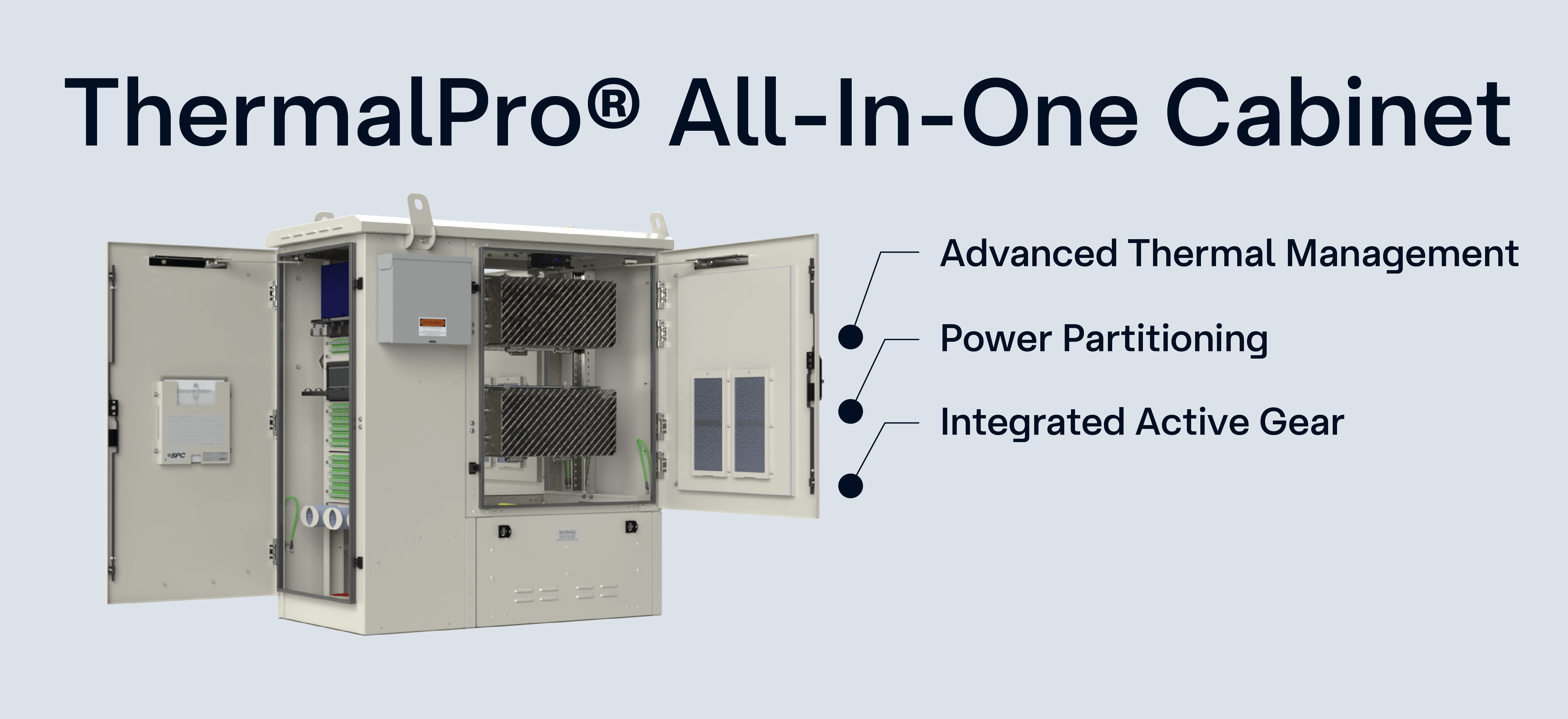
Because expanding an existing control house is frequently cost-prohibitive or logistically impossible, the industry has increasingly turned to a purpose-built alternative: ThermalPro® All-In-One customized outdoor cabinet and other cabinets in the ThermalPro® series.
It’s important not to think of these cabinets as simple metal boxes. In an FTTS deployment, they function as thermal managed, self-contained micro-shelters. Installed outdoors in harsh substation environments, they must deliver a level of protection and performance far beyond a standard roadside telecom enclosure.
To reliably support the interface between the fiber backbone and the electrical grid, these cabinets must feature:
- Advanced Thermal Management: Integrated HVAC units, heat exchangers, or active ventilation systems are critical for maintaining the narrow temperature ranges demanded by optical transport and switching equipment – regardless of outside conditions.
- Power Partitioning: Safety and reliability are non-negotiable. High-quality designs often include separate compartments for battery backup systems. This isolation prevents battery outgassing from damaging sensitive electronics housed in the primary equipment bay.
- Integrated Active Gear: These are not passive splice points. They serve as active edge nodes, housing optical transport, termination panels, and secure switching infrastructure.
No two substations are exactly alike. Footprints, thermal loads, power requirements, and security standards vary widely between investor-owned utilities and cooperatives. As a result, one-size-fits-all solutions rarely deliver optimal results.
This is where the combined capabilities of the Belden ecosystem create a meaningful advantage.
Rather than forcing utilities to stitch together components from multiple vendors, our portfolio of leading brands like PPC and Precision OT enables deployment of a fully integrated, purpose-built FTTS node designed specifically for the substation environment.
- PPC designs custom-engineered, NEMA-rated outdoor cabinets tailored to specific footprint, thermal, and power requirements. The PPC team of engineers can provide either empty cabinets or fully integrated ones that are tested at the factory before being shipped into the field.
- Precision OT supplies the optical layer through high-reliability transceivers that ensure consistent, secure data transmission across the entire network.
- Together, Belden’s PPC and Precision brands bring hardened networking to the edge. Drawing on deep expertise in industrial and smart-building environments, Belden provides ruggedized switches and management platforms engineered to withstand the EMI, vibration, and temperature extremes common in substations.

Building the Future of Fiber to the Substation
FTTS has evolved from a cost-saving initiative to a strategic imperative. As AI-driven loads accelerate and NERC CIP requirements tighten, the ability to deploy secure, high-performance fiber nodes at the grid edge is no longer optional – it’s fundamental.
Physical space constraints shouldn’t be allowed to stall progress. With customized, integrated outdoor cabinet solutions, utilities can bypass the limitations of aging control houses while laying the groundwork for scalable, secure grid optimization.